Just as lockdown kicked in back in March, Roger set about asking people to list their five favourite books - recommendations for a good read to keep us all occupied. The responses came in from people of all ages across the Forest, with their top fives posted on Reading the Forest's social media channels. Anna Grimmett has been looking at the lists, analysing the choices - and reflecting on the books that appeared more frequently than any others.... 
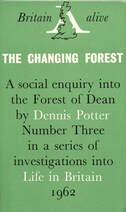
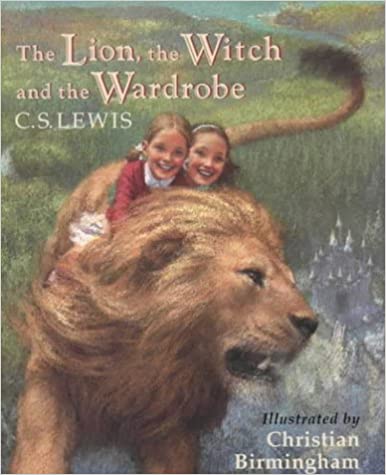
Hello again, Anna here. After twenty seven of you gave your five favourite book choices, Roger asked me to compile a book list in order of popularity and it’s been fascinating to see the books you chose and the reasons why you chose them. I was so pleased to be able to report back that a Forest book, Dennis Potter’s “The Changing Forest”, had taken joint top position along with C. S. Lewis’s “The Lion, The Witch and The Wardrobe”, each having been chosen three times (although alphabetically I’ve popped Potter in at the number one spot). Six books emerged as the most popular, the remaining four each having been chosen twice. The rest of the books are listed in no particular order and I’ve highlighted Forest books for you in green.
Most Popular Book Choices 1. The Changing Forest, Dennis Potter 2. The Lion, The Witch and The Wardrobe, C.S. Lewis 3. Great Expectations, Charles Dickens 4. The Lost Words, Robert MacFarlane & Jackie Morris 5. Macbeth, William Shakespeare 6. One Day, David Nicholls With no prior knowledge of Dennis Potter’s work other than from the Reading the Forest website, I borrowed a copy to read to help me reflect on why the most popular books might have been chosen. I struggled with the first few chapters and so a friend suggested I watch his Melvin Bragg interview from 1994, aired just a few months before he passed away. Although a very sad period in terms of Potter’s diagnosis, it came across as an honest portrayal of his life and work and I found further reading of his book much easier. Those who chose it described it as providing “a rare and unique insight into a significant period of change in the Forest’s history” and being “a profound book on social change in the Forest in the late 1950s and 1960s”. The style of writing and Potter’s frank and intimate descriptions gave me a real sense of this notable period of transition and how the resulting changes impacted so profoundly on Foresters. I can see why it is regarded as being so influential. A Google search of “The Lion, the Witch and the Wardrobe” confirmed its popularity and it was no surprise that it generally ranked in the same position nationally as it did in the Forest. There’s a timeless quality to the story, not just in terms of different generations who have enjoyed it, but also that as adults we are still pulled back to those visceral childhood memories of stepping into our own fantasy world, through our very own wardrobe and creating heroic adventures in our own imaginary wonderland (or is that just me?). I have concentrated on the top two books for this piece, although I had hoped to be able to find a common theme running through the most popular choices. As with the rest of the books on the list, the six most popular are also very diverse and personal and I’ve not yet been able to spot any connections. I’d be interested to hear from you if you find any. It’s been a pleasure to learn which books have influenced people and to see so many Forest books chosen as favourites. Most Popular Book Choices: 1. The Changing Forest, Dennis Potter 2. The Lion, The Witch and The Wardrobe, C.S. Lewis 3. Great Expectations, Charles Dickens 4. The Lost Words, Robert MacFarlane & Jackie Morris 5. Macbeth, William Shakespeare 6. One Day, David Nicholls 7. 1984, George Orwell 8. The Wind in the Willows, Kenneth Grahame 9. Into Thin Air, Jon Krakauer 10. A Night to Remember, Walter Lord 11. Severn Tide, Brian Walters 12. A Gloucesterhire Lad, at Home and Abroad, F. W. Harvey 13. The Stolen Years, Hugh Falkus 14. Forest Humour, Harry Beddington 15. These Silent Mansions, A Life In Graveyards, Jean Sprakland 16. Dancing the Charleston, Jacqueline Wilson 17. The World's Worst Children, David Walliams 18. A Place Called Perfect, Helena Duggan 19. My Friend Walter, Michael Morpurgo 20. Hetty Feather, Jacqueline Wilson 21. The Amber Spyglass, Philip Pullman 22. La Belle Sauvage, Philip Pullman 23. The Knife of Never Letting Go, Patrick Ness 24. Ruin and Rising, Leigh Bardugo 25. The Gruffalo, Julia Donaldson 26. We're Going on a Bear Hunt, Michael Rosen 27. Stick Man, Julia Donaldson 28. Winnie the Pooh, A. A. Milne 29. The Witcher: The Last Wish, Andrzej Sapkowski 30. Wolf Hall, Hilary Mantel 31. The Night Circus, Erin Morgenstern 32. Eragon, Christopher Paolini 33. Confessions of a Sociopath, M.E. Thomas 34. Thomas the Tank Engine, Wilbert Adrey 35. A Squash and a Squeeze, Julia Donaldson 36. Usborne Illustrated Classics for Boys, Robin Hood, Various 37. A Children’s Treasury of Milligan, Classic Stories & Poems, Spike Milligan 38. Goosebumps, The Movie Novel, R. L. Stine 39. Little House on the Prairie, Laura Ingalls Wilder 40. Anne of Green Gables, Lucy Maud Montgomery 41. Anne Frank, The Diary of a Young Girl, Anne Frank 42. Treasures of the Snow, Patricia St John 43. Black Beauty, The Autobiography Of A Horse, Anna Sewell 44. When Blackbirds Sing, Martin Boyd 45. Clean Straw for Nothing, George Johnston 46. The War of Don Emmanuel’s Nether Parts, Louis de Bernières 47. The Music Shop, Rachel Joyce 48. Wuthering Heights, Emily Bronte 49. Romeo & Juliet, William Shakespeare 50. The Kite Runner, Khaled Hosseini 51. The Curious Incident of the Dog in the Night-Time, Mark Haddon 52. My Family and Other Superheroes, Jonathan Edwards 53. The Great Gatsby, Scott Fitzgerald 54. On The Road, Jack Kerouac 55. Our Country’s Good, Timberlake Wertenbaker 56. The Alchemist, Paulo Coelho 57. 2001: A Space Odyssey, by Arthur C. Clarke 58. The Complete Beatles Songs, by Steve Turner 59. A Week’s Holiday in the Forest of Dean, John Bellows 60. The Spitfire Story, Alfred Price 61. Left Hand of Darkness, Ursula Le Guin 62. Shardlake Series, by C.J. Sansom 63. The Ragged Trousered Philanthropists, Robert Tressell 64. Pride and PrejudiceJane Austen 65. The Shropshire Lad, A.E. Housman 66. Head Injury, A Practical Guide, Trevor Powell 67. Witches Abroad, Terry Pratchett 68. The Nine Tailors, Dorothy L. Sayers 69. The Concise British Flora in Colour, W Keble Martin 70. The Language of Flowers, Vanessa Diffenbaugh 71. Head of State, Andrew Marr 72. The Children Act, Ian McEwan 73. The Unlikely Pilgrimage of Harold Fry, Rachel Joyce 74. Catlin’s Cove, Kim Simmonds 75. Germinal, Emile Zola 76. On Photography, Susan Sontag 77. Geology of the Forest of Dean Coal and Iron Ore Field, F.M. Trotter 78. The Freeminers, Cyril Hart 79. A Hitchhiker's Guide to the Galaxy, Douglas Adams 80. Noughts and Crosses, Malorie Blackman 81. The Verderers and Forest Laws of Dean, Cyril Hart 82. The Forest of Dean: an Historical and Descriptive Account, H.G.Nicholls 83. Forest of Dean: Iron Making in the Olden Times, H.G. Nicholls 84. Sophie’s World, Jostein Gaarder 85. Harry Potter Series, J K Rowling 86. Lydmouth Crime Series, Andrew Taylor 87. Warren James and the Dean Forest Riots, Ralph Anstis 88. Exploring Historic Dean, John Sheraton & Rod Goodman 89. Student Diver Tool Box, Sub-Aqua Association 90. Goodnight Mr Tom, Michelle Magorian 91. Danny, The Champion of the World, Roald Dahl 92. Barbarian Days, William Finnegan 93. A Prayer for Owen Meany, John Irving 94. The Life Project, Helen Pearson 95. Birdsong, Sebastian Faulks 96. The Small Hand, Susan Hill 97. Captain Corelli's Mandolin, Louis de Bernieres 98. Now All Roads Lead to France, Matthew Hollis 99. The Worst Journey in the World, Apsley Cherry Gerrard 100. A Story Like the Wind, Laurens van de Post 101. Green Wood, Leonard Clark 102. English Journey, J. B. Priestly 103. The Box of Delights, John Masefield 104. Old Peter’s Russian Tales, Arthur Ransome 105. Catch-22, Joseph Heller 106. Alice in Wonderland, Lewis Carroll 107. The Ginger Man, J. P. Donlevy 108. Sepulchre, Kate Mosse 109. Huckleberry Finn, Mark Twain 110. The Lord of the Flies, William Golding 111. Four Kings, George Kimball 112. Pet Sematary, Stephen King 113. Captain Scott, Ranulph Fiennes 114. Affluenza, Oliver James 115. Tony Benn: A Biography, Jad Adams 116. Revolution, Russell Brand 117. Chavs: The Demonization of the Working Class, Owen Jones 118. My Story, Steven Gerrard 119. The Edge of the Sword, Anthony Farrer-Hockley 120. A Fool in the Forest, Leonard Clark 121. F. W. Harvey, Soldier Poet, Anthony Boden 122. Archaeology in Dean, by Cyril Hart 123. Landscapes, Robert Macfarlane 124. I Am the Seed that Grew a Tree: a Nature Poem for Every Day of the Year, Fiona Waters 125. Hill Shepherd, a Photographic Essay, John & Elizabeth Forder 126. Chasing the Monsoon, Alexander Frater 127. The Leopard, Guiseppe di Lampedusa 128. Akenfield, Ronald Blythe 129. The Diary, Samuel Pepys 130. The Talented Mr Ripley, Patricia Highsmith
0 Comments
 Heritage Open Days have been running in the UK since 1994 and today boast over 5,000 events across the country. Included are heritage sites of interest normally closed to the public, museums that normally charge an entry fee throwing their doors open for free, and buildings normally open to the community whose heritage has often been overlooked. Reading the Forest has partnered with several local groups in the Forest on Heritage Open Days in recent years. In 2017 the extraordinary story of Gypsy Petulengro and his links to Viney Hill were explored with an exhibition at the village's All Saints Church, the location of his remarkable funeral and burial. 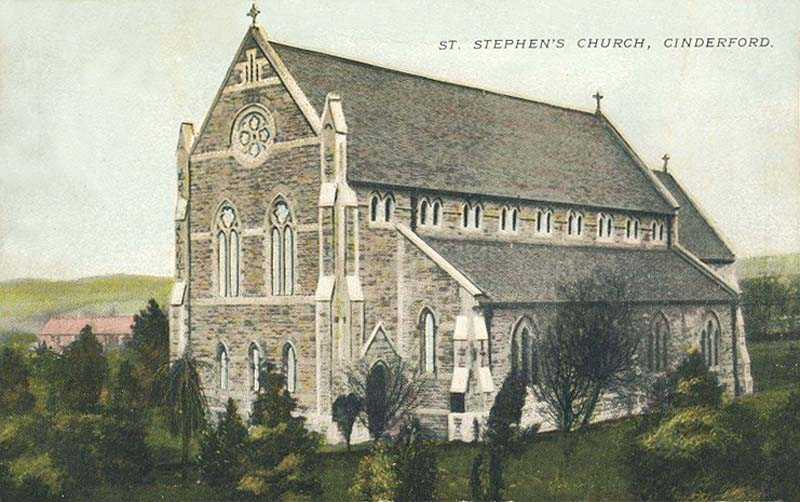 Last year saw brass bands and poets come together at St Stephen's Church in Cinderford for a celebration of the Forest's rich heritage of band music and poetry, also marking 130years of the church building. The event included a competition prize-giving for some of Cinderford's best young poets, a sure sign that the town is incubating the next generation of literary talent. This year sees a return to St Stephen's - though 'in spirit' only - with a virtual online event that marks this important Cinderford building's link with the poet Leonard Clark. A series of specially recorded readings of some of Clark's poems will be launched online on Saturday 12th September - simultaneously via Reading the Forest's Events Page and the Cinderford Churches Benefice website. Amongst the videos are several poems chosen and read by members of Clark's family. Also included is a reading of Clark's remarkable final poem An Intimate Landscape in which he revisits the places and people of his youth in the Forest for one last time. The poem is read by popular Forest poet Keith Morgan. 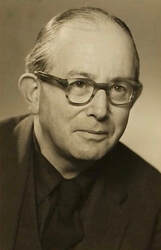 Leonard Clark was a nationally important poet, literary editor, and educationalist whose life and work were grounded in Cinderford and the Forest of Dean. He was fostered to a family on Belle Vue Road in Cinderford and raised in the town until he left to train as a teacher in the late 1920s. He became an influential figure in the world of poetry principally through his anthologies and his role in promoting poetry education for which he was awarded an OBE. He was admired and praised by luminaries such as Ted Hughes and Seamus Heaney before he died in 1981. His early life and subsequent work were strongly influenced by his experiences in St Stephen’s Church which stood a few yards down the road from where he lived. His mother was a member of the congregation and he became a chorister in the Church. Written late in his life, his memoirs A Fool in the Forest and Green Wood are replete with stories and characters that centred around the Church which was at the heart of the community. 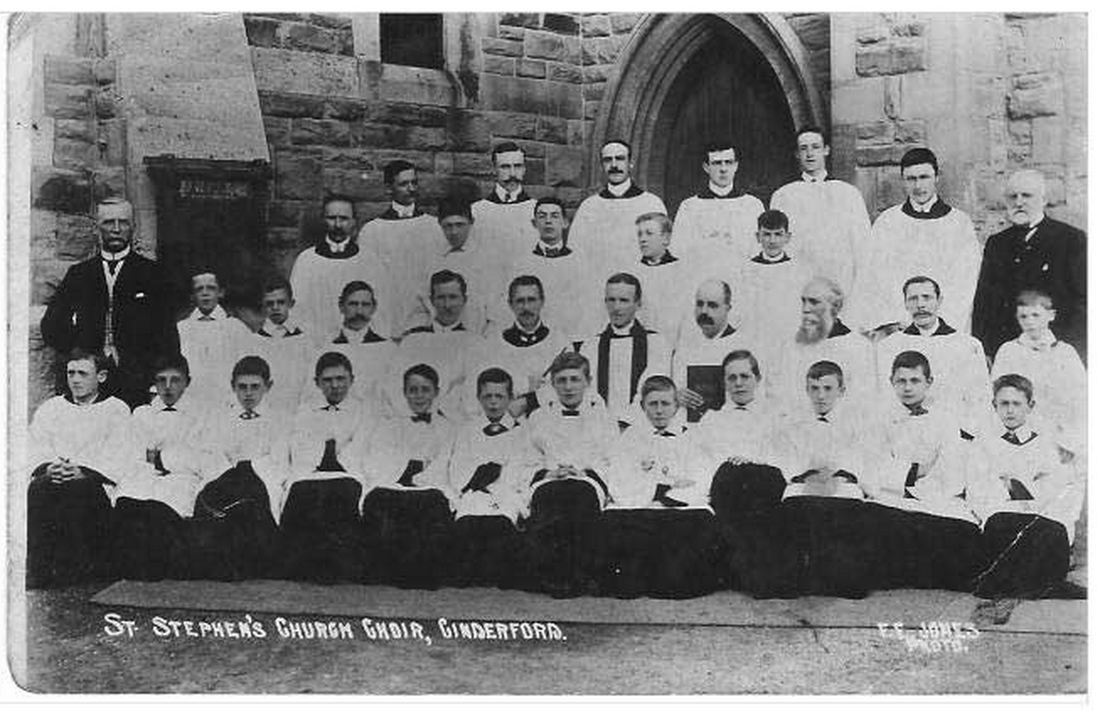 He wrote about the choir and devoted one chapter to the story of Philip Charles Walding (1871-1949), also known as ‘Charlie’ Walding, the blind organist of St Stephen’s Church who played the church organ for forty-four years (seen in the photograph above holding the book). The profound influence of the church was such that he requested that his ashes be buried there and following his death a special service was held to inter them close to where he stood as a chorister seventy years previously.
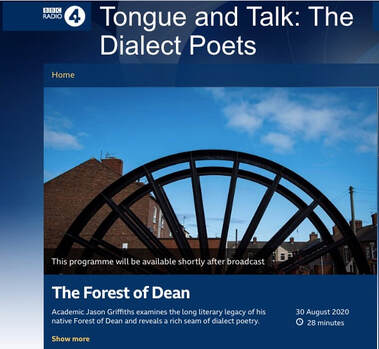 The Forest of Dean’s dialect poets are the subject of BBC Radio 4’s series Tongue and Talk: The DialectPoets, on Sunday 30th August. The series travels the country highlighting the rich diversity of local dialects and the poets who write and perform in them. Turning its attention to the Forest of Dean this edition of the programme features Keith Morgan and Maggie Clutterbuck reading their work and talking about the importance of Forest dialect in their poetry. Dick Brice reads from one of the earliest published works to include Forest dialect, and former Forest Bookshop owner Doug McLean remembers the Forest poets and performers he got to know during his 40 years in local publishing.
The programme came about when producer Catherine Harvey got in touch with the Reading the Forest project. The programme is presented by Reading the Forest's Dr Jason Griffiths. Project co-director Dr Roger Deeks explains the importance and influence of F. W. Harvey’s dialect poems that he wrote after moving to Yorkley, and his broadcasts about the Forest in the early years of the BBC. The programme also features archive recordings of F. W. Harvey, Harry Beddington, Dennis Potter and Winifred Foley. Finding out more about the history of Forest dialect Jason talks to linguist Dr Michelle Straw at the University of Gloucestershire, whilst a visit to Monument Freemine shows that Forest dialect is alive and well there. We also hear from local schools who today, thanks to enthusiastic local teachers, teach their pupils to take pride in their local identity by learning of Forest dialect poems. The programme is being broadcast on BBC Radio 4 at 4.30pm on Sunday 30th August and will be available online afterwards through BBC Sounds. 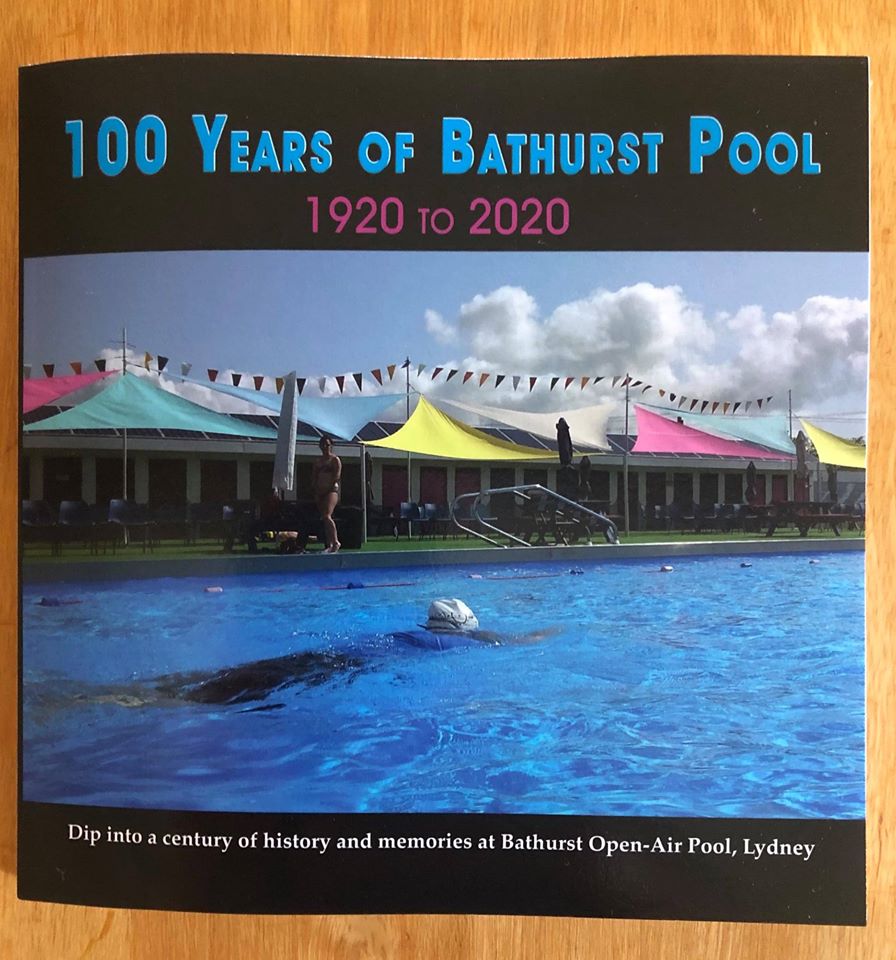  One of the great Forest assets is the Bathurst Pool in Lydney. Created in the era when outdoor swimming pools became popular in the 1920s, the pool was a terrific boost to local morale after the devastation of the First World War. Charles Bathurst, 1st Viscount Bledisloe, who founded the pool, had been an important figure in agriculture during the War and extolled the virtues of allotments and saw the benefits of a municipal pool. It was only in the 1930s that the term 'Lido' was first used to describe such pools. It is to the credit of a wonderful team of volunteers that the pool is in fabulous condition and used by so many people. The pool has been in existence for 100 years in October and to celebrate the volunteers enjoyed a visit from HRH Princess Royal. In conjunction with the anniversary, Ali Humphries has edited a brief history and magnificent collection of swimmers and visitors stories. There are some lovely stories from past decades including one man who lost his teeth. Be assured that was a long time ago and they don't present a risk to current users!
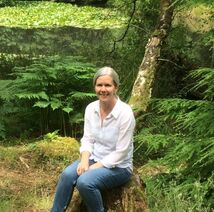 Hi there - I’m a new volunteer with Reading the Forest. I got in touch with the project leaders recently, as I was looking for somewhere to focus my creative energy as well as offering my time. The project particularly interested me as an opportunity to learn more about the area I live in, it’s unique history and the people it has inspired to put their experiences in writing. When I was asked what interests me during my introductory phone call, I mentioned that I felt drawn to write, but that I needed a push from someone to tell me what to write about. So when I was asked to contribute a reflective piece on “discovering that the Forest has a rich literary heritage” to be used in this blog, I immediately realised be careful what you wish for, particularly if your last attempt at creative writing was over thirty years ago in your early teens and entitled “the Turnip Man”! So, time for a closer look at the website. I was really impressed at the diverse range of published books and also delighted and encouraged to see so many accomplished female contributors, past and present. Having lived in the Forest as an “incomer” for just over eight years I’m quite ashamed it’s taken me so long to find this out. As an area of such breathtaking beauty and cultural and historical heritage, it should have come as no surprise that people have found themselves moved to share their experiences, by way of factual accounts of Forest history, autobiography or poetic verse and so much more besides. It’s all here on the website for you to look at and to stimulate further enquiry. Most of all, I realise this really must be something that Foresters are proud of and I’m so glad I found it. 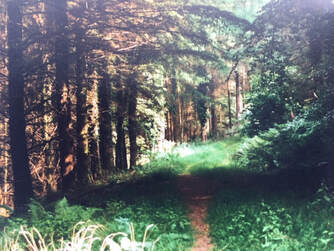 Having explored the website a little, I’m left with a sense of keen curiosity to learn more about the writers and how the Forest has shaped their lives. I look forward to reading some historical pieces and maybe find a novel that makes me wonder which part of the Forest has inspired it. I have an initial highlight I’d like to share, a couple of verses from “Secret Places”, which is a poem by Joyce Latham. I will hold these words close as I walk in the Forest, in the hope of stumbling on such secret places of my own: I know of secret places where the willows bend, And little whispering streams play hide-and-seek; Where minnows dart And dragonflies swoop from the sky, But no-one else knows, only I. I know of secret places where the bluebells sway, And timid deer hide deep within the shade; Where thrushes sing And honeysuckle climbs up high, But no-one else knows, only I. 'Secret Places' from Poems of a Forester (1991) by Joyce Latham The simple pleasures of a drink at the local - a chance to meet friends and socialise - are for now tantalisingly out of reach as pubs remain closed under the current ‘lockdown’ restrictions. Whether its beer, cider, a glass of wine, or a lemonade, the difference between a drink at home and a drink in a favourite pub must can be keenly felt by many at the moment: because the pub is much more than just a place to get a drink. At the heart of many towns and villages it is meeting place, music venue, the home for darts, skittles, pool and quoits teams, a place to eat, and in some cases too a bed for the night for visitors. The central role pubs play in our community has been highlighted recently as many became hubs for food distribution and other services during this pandemic. Unsurprising then that the pub has been an inspiration for many writers over the years, including our own Forest authors and poets too. “Zat wi’ all yer butties, W’en all yer work be done”, wrote poet Keith Morgan in ‘Zupper at the Local’ (in Albert’s Dree Wi’ker, 1985) highlighting the role of the pub as a place of companionship and leisure at the end of a working day. In another masterful work of dialect poetry Keith turned to the specific pleasures of a drink, in ‘There Byunt Nothin’ Like Good Ale’ (in The ‘azards o’ Chimuck Szwippin', 1978). Aware too of the dangers of too much, or the wrong choice of drink, in his poem ‘Guzzlin’ Stuennem’, he featured the legendary local cider that was, according to Keith, “A filthy evil brew” (also in Albert’s Dree Wi’ker, 1985). When things get back to normal, keep an eye out for the next opportunity to hear Keith performing his poetry. Many years before Kieth Morgan took up his pen, poet F. W. Harvey (known as the Gloucestershire Laureate) was a well-known pub regular in and around Yorkley after he moved there in the 1920s. Harvey wrote the lines “Sing a merry bottle-song; Let the tankards clink!”, in his poem ‘Song for My Sons’, and in his poetic tirade ‘A Curse’ (both poems from In Pillowell Woods and Other Poems, 1926), he listed all the damnations he wished visited on a local landowner who wouldn’t allow a pub on his estate. As Harvey biographer Anthony Boden puts it (in F. W. Harvey Soldier, Poet, 1998) “Will Harvey, deprived of his beer, knew no mercy!” According to Brian Waters (in The Forest of Dean, 1951), so popular was Harvey in the Forest that one of his poems once hung on the wall inside the The Jovial Colliers pub in Lydbrook. Though that poem is no longer there, lines from present-day local author and poet Maggie Clutterbuck are painted on a wall inside Parkend’s Fountain Inn. For Harvey, like many other Forest authors, the pub was a place to socialise but also a place to pick up stories, sometimes versions of the same stories appearing in several different local writers’ work. The pub has also been a place for writers to practice and develop material in front of an audience before eventually being published. For poet Joyce Latham it was doing a turn in pubs, clubs and at ‘smoking parties’ that allowed her to develop her talent as a poet and story-teller before her poems were printed in the local newspapers, and later in a series of popular books. Joyce herself is remembered in the West Dean Writers Mural painted by artist Tom Cousins on the outside of the former Masons Arms (also known as Help Me Through the World) pub in Coleford. It was only as the mural was being unveiled that Joyce’s family pointed out that she used to work in that very pub. The role of the pub, and especially the social club, as a venue for local talent was one of the many themes explored by Dennis Potter in his book The Changing Forest (1962), something he returned to in his television drama serial The Singing Detective (1986) featuring scenes filmed at Berry Hill Club. It was a pub too, The Angel Inn in Coleford, that publisher and Forest Bookshop owner Doug McLean chose as venue for the recording of local writers for the 1981 album Forest Talk. The record features Forest writers Winifred Foley, Harry Beddington, and Keith Morgan, as well as local singer-songwriter Dick Bryce, and it is claimed that if you listen carefully you can even hear the pub’s toilet being flushed in the background.
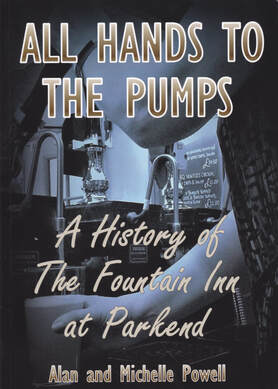
They quickly realised the importance of the pub to the residents of Parkend, writing in the book that “we had bought more than just a building”, and that “Along with the pub came a large ‘family’ of regulars, all of whom shared a very special affection for, and dedication to the Fountain Inn.” Alan and Michelle carried out a major refurbishment of the pub, reinstating visitor accommodation and introducing food, and also filled the bar with artefacts from Parkend’s industrial past. Though they admit that the number of artefacts on display have been ‘thinned’ during their most recent renovation, plenty remain in the pub to give an insight into the history of the village. The interior also boasts an impressive mural by Tom Cousins depicting Parkend’s Warren James, the leader of the 1831 anti-enclosure riots in the Forest of Dean. As the book details, Alan and Michelle’s alterations to the pub are only the latest in a long history of developments to the building as it evolved from its 1834 origins as a small beer house, through its expansion and redevelopment in the 1840s (including the addition of its notable bay window) as owners responded to growing clientele of local industrial workers and visiting commercial travellers in the nineteenth century. The book is amply illustrated with drawings and photographs depicting the building’s architectural evolution, but it is far more than a simple account of the pub as a building. This fine book tells the history of the Fountain Inn through the fascinating stories of the individuals and families who have run, and at times owned, the pub over the years. Amongst these was the remarkable Eliza Burgham. Married to the son of Redbrook Brewery owner Thomas Burgham, when her husband Henry died in 1869 she inherited the brewery. Alan and Michelle explain how Eliza not only took on the running of the business (unexpected for a woman at the time) but also expanded the number of pubs the brewery owned, including the purchase of the Fountain in 1872. They note that soon after taking it over Eliza’s company was referring to ownership of The Fountain ‘Hotel’ in Parkend and it was still known as such until the mid-1930s when it reverted to being the Fountain Inn. As well as the history of the building and its owners, what makes this concise 64 page book such an impressive and rewarding one to read is the broader social, economic and legislative background that Alan and Michelle have included as context for their history of the pub and the people connected to it. Picking out just one example, they explain how the counter bar was not a common feature in early beer houses but was adopted after the 1820s as public houses sought to mimic the appeal of the elegant gin houses popular at the time. This same influence saw the introduction of “ornate mirrors, etched glass, polished brass fittings and lavishly tiled surfaces”. As well as these national developments All Hands to the Pumps, also provides a great introduction to the history of Parkend; the changing fortunes of the iron works; the coming, departure and eventually return of the railway; and the School of Forestry, all providing valuable context for the history of the pub. As Richard Daniels MBE notes in his foreword to the book it “contributes to the wealth of history books written about the Forest of Dean”, delivering more than simply a history of the Fountain Inn alone raising “awareness of the important position our local pubs hold within the area’s heritage landscape”. Alan and Michelle’s understanding of the evolution of the public house, its role in the community, and its need to respond as a business to the changing needs of its customers suggests the Fountain Inn is in safe hands and will remain at the heart of Parkend for many years to come. 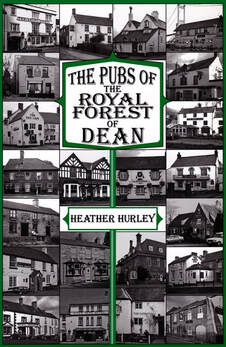 The present restriction to trading may sadly though see some pubs cease trading for good, once much-loved local institutions and businesses simply unable to survive. Unprecedented in modern times as the current pandemic is, the normal ebb and flow of pubs’ fortunes have seen many come and go over the years. On further investigation it sometimes easy to think that almost every old building in the Forest was at one time a brew house, public house or inn at some point in its past. For a truly encyclopaedic record of just that, see Heather Hurley’s 2004 book The Pubs of the Royal Forest of Dean. The book is no less than an attempt to give an account of every pub there has ever been in the Forest. Chapter One, ‘Inns, Taverns & Beer Houses’ provides an introduction to the topic nationally as well as locally, whilst Chapter Two ‘Brewers, Cider Makers & Wine Merchants’ details many of the local drinks makers in the Forest and the wider region. The remainder of this 300 plus page book is a geographical tour of the Forest of Dean, complete with maps, locating all its past and present drinking establishments. The book is packed with black and white photographs of contemporary pubs (too many of which have sadly closed down since the book's 2004 publication), current pubs in their past, and many once thriving pubs now long since converted to homes or in some cases simply demolished. This book is also rich in reproductions of old advertisements, directory listings, and auction posters for the sale of pubs. A tour de force of research the book also includes relevant extracts from several works of Forest literature, including Dennis Potter’s The Changing Forest (1962), and Winifred Foley’s A Child in the Forest (1974), whilst Keith Morgan’s poem on the pleasures of ale (mentioned above) is reproduced in full. Heather also includes several contemporaneous newspaper excerpts of relevant local news stories, including drink-induced crime, so perhaps it is no surprise that ‘the bears’ story makes an appearance in the section on Ruardean pubs. Sad though it may be to see pictures of many once-fine buildings such as The Feathers in Lydney, The Bridge Inn at Cinderford, or The George in Mitcheldean that have now gone forever, this engaging book also details the rich history of the many fine Forest pubs that continue to thrive to this day. 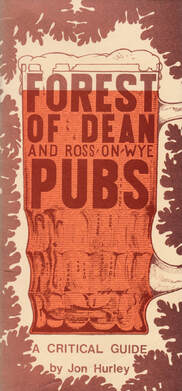 If you’re able to track down a copy (Cinderford library hold a reference copy), the booklet Forest of Dean and Ross-On-Wye Pubs: A Critical Guide (1981), is evidence of how much our expectations of pubs, in particular the food on offer, have developed in recent years. The book marvels at the fact that The Saracen’s Head at Symonds Yat offered a lunchtime menu featuring not only steak pie and soup but also “a litany of other delicacies, such as Ravioli, Prawn Cocktail and Smoked Mackerel”. The book’s author, Jon Hurley, also noted with some annoyance each establishment that hosted a Space Invaders machine. The time-capsule nature of this fascinating ‘pub critic’ booklet is reinforced by the list of once pervasive drinks brands such as ‘Worthington E’, and ‘Double Diamond’. 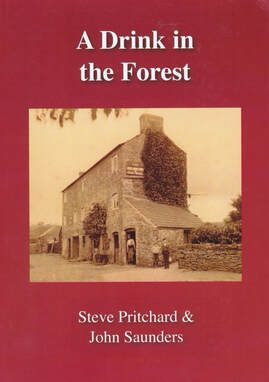 As touched on in All Hands to the Pumps, the Forest has a rich history of beer brewing and cider making itself, and it is this history that Steve Pritchard and John Saunders* detail in their book A Drink in the Forest (2010). Reading their book, we discover that there were once breweries in villages such as Blakeney and Ruardean, in Coleford, and in Cinderford too (in more recent times the home of the Hawthorn Brewery, and then Freeminer Brewery). 1868 saw the establishment of a significant brewery operation at Mitcheldean by local man Thomas Wintle. A large building was erected and, as the authors note “the brewery was a success”. It continued as an independent company until 1930 when it was taken over by a Cheltenham brewery operating it until 1937. Afterwards the building was taken over by Rank Xerox.
As well as the makers of beer and cider the book also details some of the wine and spirit merchants, and the many mineral water and soft drink manufacturers once based in and around the Forest. Again, this is another wonderfully illustrated book, and amongst the colour photographs are pictures of enamel advertisements, including one in blue and white for Royal Forest of Dean Mineral Waters “Manufactured at The Olde Speche House” [sic]. Within the book’s 112 pages is the history of a once vibrant and varied local drinks industry, and whilst most of the companies listed have long ceased trading, the book could perhaps be seen as a history merely of the first phase of what is now a resurgent local scene for drinks makers. The successful Severn Cider, based at Awre, is now just one amongst many Forest cider makers for example, such as McCrindle’s cider, and Jolters Press. And though the Freeminer Brewery is sadly no longer operating, successful local beer makers in the Forest today include Longhope’s Hillside Brewery, and the Bespoke Brewing Company based in part of the very former buildings of the Mitcheldean Brewery. As many of us patiently await the safe reopening of our local pubs, it’s no good pretending these fine books about Forest pubs, their landlords and landladies, brewers, and drinks merchants; and Forest poets odes to the pleasures (and perils) of a sociable drink are any substitute. But they might, just, offer a small diversion whilst we bide our time until re-opening time. *John followed up with his another, even more detailed account, in 2012 with Breweries of the Forest of Dean, Monmouth and Ross-on-Wye.
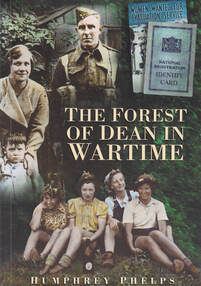
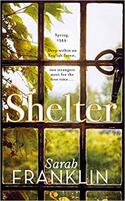
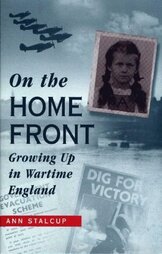
VE day brought joy, immense relief and, in the period that followed, a desire for change. Social commentators such as Dennis Potter for example, observed that the Forest of Dean was transformed by the Second World War: "The atmosphere of confidence and something approaching trust was inescapable, and provides a great contrast to the more comfortable atmosphere today: the war had been won, our government was in, and they were starting to build houses again, beginning with lines of white boxed prefabs at the near-by village of Broadwell." Though Potter was himself too young at the time many older Forest writers had been actively involved during the War. Harry Beddington for example was responsible for coordinating civil defence from the Belle Vue Centre building in Cinderford, and F.W. Harvey commanded a unit of the Home Guard. The impact of the War can be found in many books written afterwards and the period continues to be a source of fascination for readers, researchers and historians. The impact of American GI’s, and Italian and German Prisoners of War were perhaps the most exotic aspect of the War locally and left a lasting legacy for many Forest families. Rumours of the dumping of US military supplies and munitions in mines – the Forest was a huge ammunition dump – persist in popular memory (despite little historical evidence having yet been found). Forest and Gloucestershire popular histories on the period include: The Forest of Dean in Wartime ( by Humphrey Phelps On the Home Front: Growing up in Wartime England (1998) by Ann Stalcup Home Front Dean - DAG - John Putley and Alf Webb. Gloucestershire Airfields in the Second World War (2005) by David Berryman. Gloucestershire at War 1939-1945 (1979) by Derek Archer. Inside the Wire the POW camps and Hostels of Gloucestershire 1939-1945 (2014) by Ian MC Hollingsbee. Meet at the Schools: A History of Education in Bream (2007) by Ian Hendy. The story of Italian prisoners in the Forest is told by Laura Porciani in From El Alamein to Marconi (2011) based on the memories and artefacts kept by her father. Laura now manages a vibrant Facebook page about Camp 61 at Broadwell that attracts Italian and British followers. Sarah Franklin recently served up a memorable novel - Shelter (2017) - based on a local family, an Italian PoW and a Lumberjill in the Forest of Dean. Bill Tandy in his biography A Doctor in the Forest (1978), recounts many of his wartime experiences, including examining captured Luftwaffe crew and nearly being bayoneted by the Home Guard and more. There are many memoirs that reference the War, but it is the sole focus of the book Wartime Memories from Newnham (1986) edited by Hugh Lynch-Blosse. This book includes a chapter on the famous test pilot Jim Cordes of Newnham who actually flew Goering on a pre-war flight. Lynch-Blosse obliquely and understatedly mentions his part in the Great Escape, he was one of the many people in the Forest who built on the escaping tradition of FW Harvey from World War One. Others were Kenneth Lockwood a Colditz inmate living at Broadoak and Jock Hamilton- Baille a Colditz inmate living at Beachley.* Other memoirs include Old Memories (1986) by Margery Burch another Doug McLean publication, that addresses the wartime visit of two Jewish children refugees from persecution in Germany. The other Forest memoirists, Winifred Foley, Joyce Latham, and several less well-known figures, always mention the War as an important and sometimes life changing event. Seventy-five years later we remember VE day, whilst living through another life changing moment in history. Strangely, World War Two will be remembered for opening up the Forest, Covid-19 will be remembered for closing it down. *Information courtesy of volunteer David Price of Newnham. We're asking some of our Reading the Forest friends for their top five favourite books - no reason really, though they could make for some inspirational ideas if you're wondering what to read next! Follow us on Facebook and Twitter as over the next couple of weeks we share their top fives. Join the conversation and add your top five reads too, on Facebook or here in the comments box. We're starting with the top five from none other than local award-winning author Andrew Taylor... Andrew Taylor's Top 5 Books Dennis Potter - The Changing Forest (1962)
"I find this short book sums up so much of the Forest for me. Potter had an insider’s understanding of it, bred into him, together with an outsider’s perspective and a talent for writing. I’ve read the book several times over the last forty years and always found something new to admire and enjoy. Meanwhile, the Forest is constantly changing, as it should…" Guiseppe di Lampedusa - The Leopard (1958) "This is a wonderfully evocative historical novel set in nineteenth-century Sicily, when the fragmentary states that made up Italy were on the verge of unification. The central character is a magnificent middle-aged prince who slowly and reluctantly realises that he has to come to terms with the changing world around him." Ronald Blythe - Akenfield (1969) "In the 1960s, Blythe compiled a sort of oral survey of the inhabitants of two Suffolk villages. Here are people of all ages and backgrounds. They describe their lives, their aspirations, their memories and their fears. Blythe keeps his overt editorial presence to a minimum. Once again, it’s a book about a changing world. (Hmm, I sense a theme here.) Samuel Pepys - The Diary (written 1660-69) "At present I’m writing a series set in Restoration in England, and Samuel Pepys is making my job much easier than it otherwise would have been. Once you acclimatise to the archaic English, it’s as if you are directly inside the head of a medium-ranking civil servant on the make who confides everything to his diary - from his bowel movements to affairs of state. It’s endlessly fascinating because he puts up no barriers. But beware: the Diary as a whole runs to 1.25 million words." Patricia Highsmith - The Talented Mr Ripley (1955) This crime novel - far darker than the film versions - had quite an impact on me: I read it as I was on the verge of writing my first novel, so I’m sentimentally attached to it. Highsmith showed me that your protagonist could turn out to be a murderer, that crime novels could be about committing crimes as much as solving them. 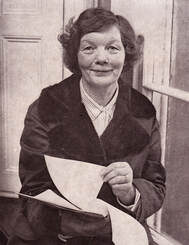 The achievements and contributions of women authors to the literary culture of the Forest of Dean is considerable. From the earliest writers of Forest literature such as Cinderford poet Catherine Drew, to twentieth-century writers such as Winifred Foley, and Joyce Latham, and then contemporary authors such as Maggie Clutterbuck, Tiffany Murray, and Sarah Franklin; women writers have told the stories of the people and places of the Forest. For some of them their achievements were doubly impressive, writing and getting published against the challenges of an education cut short, and a tough working-class life that often meant doing paid work alongside domestic expectations of their role as wife and mother.
Their work is varied in its form and subject matter, from plain poetry to expressive verse, from crafted memoir to short stories and literary novels. Catherine Drew, writing in the first half of the nineteenth-century could be a little moralistic, warning young women against being led astray by too-foppish men, or the moral corruption in wait for them if they were tempted to leave the Forest for London. But the subject of her longest poem was nothing less than a history of the Forest. In The Forest of Dean in Times Past, Contrasted with the Present she neatly sums up Forest history before coming up to her present day. hers was a time of unprecedented change with outside capital flooding into the Forest bringing railroads (horse drawn industrial tram roads) and taking mining (on the whole) from artisan craft work carried out by freeminers, to deep pits with the miners working for the colliery owners. This did though bring employment, new schools and new churches. Catherine Drew detailed it all a remarkable achievement for a woman who says herself, had only nine days of formal schooling. In the first part of the following century a young Winifred Mason was a voracious reader and developing writer at school, taken under the wing of a her teacher, Miss Hale. But for Winifred too her education ended all too soon, in her case at the age of fourteen for a life ‘in service’. It would be easy to see Catherine, Winifred, and Joyce (put off taking up a place at grammar school partly by the costs of the uniform) as victims with little agency to change their situation, but very far from it! If Winifred at that point could not choose to stay at school, or at first the type of work she would do, she would choose were. It was she who decided to head for London, and with domestic workers in demand it was she who regularly decided to change who she worked for and where. And all the while she continued to write, sending her work to the BBC, responding to what she heard on the radio, and – far earlier than is remembered – appearing occasionally on air, reading her work. Winifred Foley the author was not the creation of Woman’s Hour: she was an author, ready made by her own creative efforts that needed a final helping hand to published literary success. The Forest’s female authors have added their rich voices and stories to the literature of the Forest of Dean, bringing a variety of points of view, and variety of experiences. As much as they detail life in the Forest it’s worth remembering that they also describe the world beyond it too: in Foley’s A Child in the Forest we read about her time on London and other places too; Sybella Crawley-Bovey, at the end of the nineteenth-century, looked to the Forest of the past and detailed its connections to the world beyond, from the wealth of sugar plantations and the slave trade, to immigrant families from the Netherlands. And in contemporary times, Sarah Franklin’s Shelter, details a time when the Forest was a place of Italian POWs and former city-dwelling women relocated to the Forest to work in the Timber Corps. March 8th 2020 is International Women’s Day, and the call this year is to “challenge stereotypes, fight bias, broaden perceptions, […] and celebrate women's achievements”. Let’s all do that for the wealth of Forest literature written by women in the past, today and into the future. 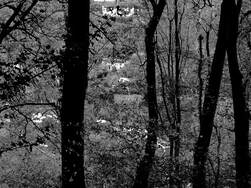 At night places take on a different personality. The busy sounds of daytime activity are replaced by the stranger sounds of night. And as daylight gives way to darkness we can lean more easily towards interior thoughts, reflections, and questions less often asked during the daytime. Daytime reason slips into nigh-time visions. What then for a writer, visiting the Forest at night? What reflections, what intersections of personal and place histories, emerge? In a wonderfully sound-rich feature for BBC Radio 4, Bristol-based writer Zakiya Mckenzie visits the Forest of Dean at night and reflects on the experience, her memories of Jamaica, and her response to the true tragic story of an African slave-boy in the Forest. Zakiya was appointed as one of two writers in residence by Forestry England in 2019 to mark its centenary, and she chose to spend much of her time in, thinking and writing about, the Forest. You can read her Forest of Dean-inspired writing here. In this programme, Night Vision, Zakiya visits the Forest again, this time at night. Meeting Reading the Forest's Roger Deeks at Lydney station she travels to Littledean to hear about the Pyrke family, and an awful event in the eighteenth-century that, local tradition says, continue to reverberate through the hours of darkness to this very day. As she travels into the Forest she also links to its rich literature, in particular through the voices of Winifred Foley and Dennis Potter as they too talk about the relationship between past & present - something hard to ignore in a forest haunted by the remnants of its past, whether that's during the day...or at night. You can listen to Zakiya's programme on BBC Sounds here.  |
Archives
November 2023
|
 RSS Feed